Why Hidden Leaks Behind Walls Are Different
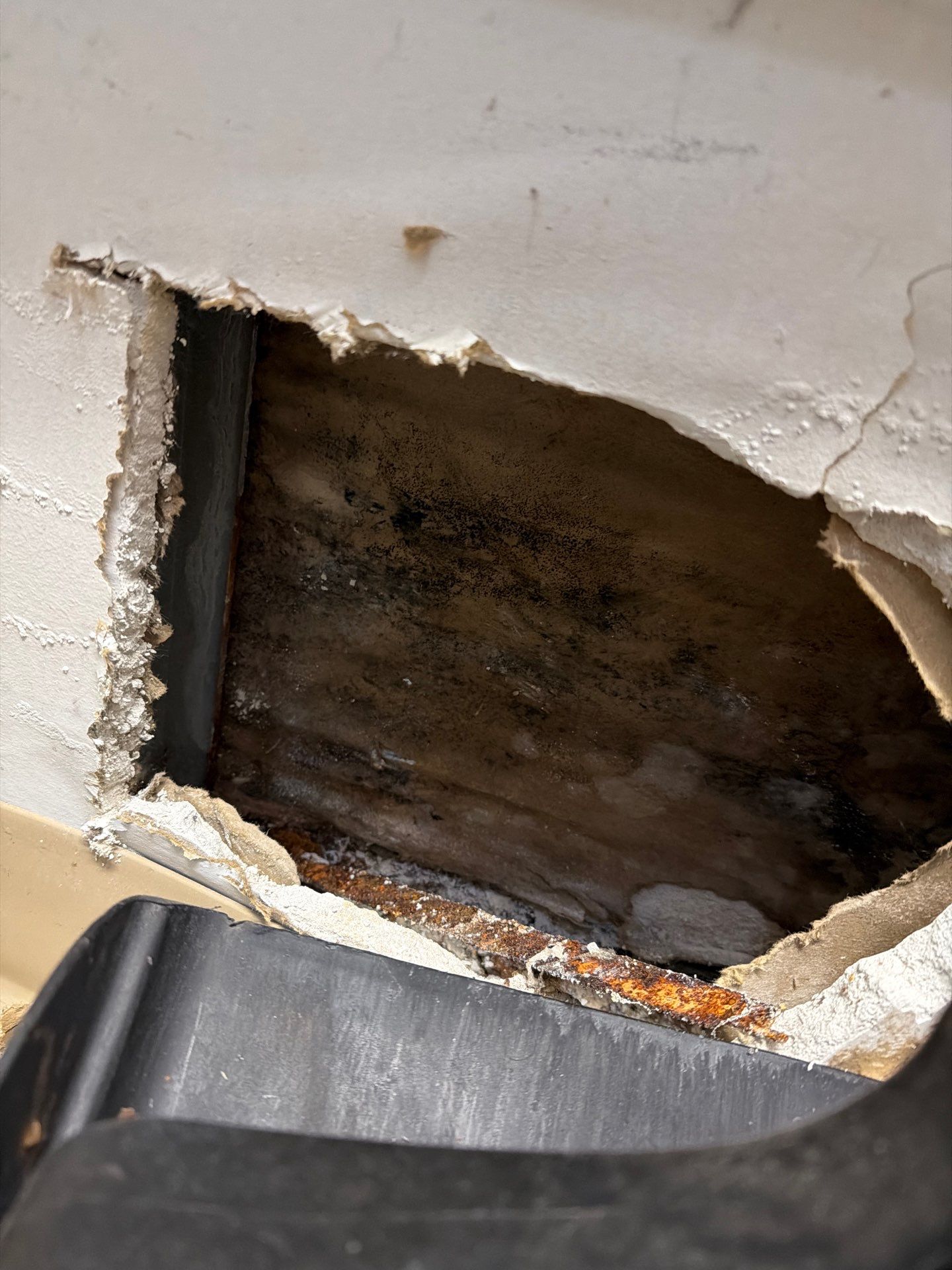
Surface water damage is straightforward. You see it, you extract it, you dry the structure, you document it for insurance. Hidden leaks inside wall assemblies operate on a different timeline. A pinhole in a copper supply line can release a quart of water per day into a stud bay, and that water has nowhere to go but into the bottom plate, the subfloor, and the insulation. In a Brookville home built between 1960 and 1995, that bottom plate is usually untreated pine sitting directly on a concrete slab or a wood subfloor. It soaks water like a sponge and stays wet for months.
The IICRC classifies this as a Category 2 situation in most cases, meaning the water carries contaminants from pipe scale, drywall paper, and microbial growth. Once mold spores activate, typically within 48 to 72 hours of sustained moisture, the remediation cost climbs sharply. A leak caught in week one might cost $1,200 to $2,800 to repair and dry. The same leak caught in month three often runs $6,000 to $15,000 because now you are removing drywall, treating framing, replacing insulation, and addressing mold. That gap is the entire reason early detection matters.
The signs you should watch for are subtle. A water bill that climbs $15 to $40 without explanation. A warm spot on a tile floor where a hot water line runs underneath. Paint that suddenly looks slightly glossy in one area. A door that stops latching cleanly because the frame has shifted a quarter inch. Any of these warrants investigation before you start cutting drywall.
The Quiet Failures We See Most Often
In Brookville housing stock, three failure points generate the majority of hidden leak calls Brookville Water Restoration responds to. The first is the shower valve body, where the threaded connection to the mixing cartridge weeps slowly into the back of the tile wall for years before anyone notices a soft spot in the adjacent closet. The second is the ice maker supply line at the back of the refrigerator, a quarter inch plastic tube that fails at the saddle valve and runs water down the back of the cabinetry into the subfloor. The third is the toilet supply line shutoff, which develops a stress crack at the compression nut and drips at a rate too small to puddle but more than enough to rot the floor flange and the joist below it.
Comparing the Five Detection Methods We Actually Use
The table below reflects what we deploy on real jobs across Indianapolis, Carmel, Fishers, and the surrounding communities. Pricing is what an honest restoration or plumbing company in this market typically charges, not a national average that does not apply to your zip code.
| Method | Best For | Accuracy | Typical Cost | Time on Site | Wall Damage |
|---|---|---|---|---|---|
| Visual and moisture meter sweep | Confirming a suspected area | Moderate, surface only | $0 to $250 (often included) | 30 to 60 min | None |
| Infrared thermal imaging | Mapping cool wet zones across large walls | High when paired with moisture meter | $250 to $600 | 1 to 2 hours | None |
| Acoustic leak detection | Pressurized supply line leaks behind tile or plaster | Very high for active leaks | $350 to $800 | 1 to 3 hours | None |
| Tracer gas (hydrogen blend) | Slab leaks and dead pipe sections | Highest available | $500 to $1,200 | 2 to 4 hours | None |
| Investigative drywall opening | Confirmed leak, ready to repair | Definitive | $150 to $400 per opening | 30 min per cut | Patchable |
Read that table carefully because the sequencing matters more than the individual prices. A competent technician does not jump straight to tracer gas on a $90 ceiling stain. We start with a moisture meter sweep and thermal imaging, which together resolve roughly 70 percent of hidden leak calls in Brookville homes. The thermal camera shows you a cold blue plume against warm drywall, the meter confirms elevated moisture readings of 18 percent or higher in materials that should sit at 8 to 12 percent, and at that point you know where to open the wall.
Acoustic detection enters the picture when you have a pressurized line losing water but no visible thermal signature, which happens with hot water lines insulated inside an exterior wall. Tracer gas is reserved for slab leaks and situations where two other methods have already pointed at a general area but cannot pinpoint the exact foot of pipe. Paying for tracer gas first is almost always wasted money. Paying for it third, after the cheaper methods have narrowed the search, is often the call that saves your foundation.
Investigative drywall opening is not a detection failure. It is the final confirmation step before repair, and in some cases it is the right starting point. If you have a clear stain pattern directly below a bathroom and the moisture meter reads wet at the ceiling, cutting a six inch inspection hole tells you in five minutes what an hour of thermal scanning would tell you with less certainty. We make that call honestly based on what your property is showing us. For deeper context on related scenarios, our guides on ceiling water damage repair and burst pipe water damage walk through the repair side once detection is complete.
One detail worth emphasizing is the environmental conditions during a thermal scan. Infrared imaging depends on a temperature differential between the wet area and surrounding dry material. If your HVAC has been cycling steadily all day and indoor surfaces have equalized, the camera may show nothing meaningful. We sometimes ask homeowners to run the hot water at a fixture for ten minutes before we arrive, or to leave the thermostat off for a few hours, so that the wet zone has a chance to differentiate. That kind of small preparation can be the difference between a clean diagnosis and an inconclusive scan that costs you a second visit.
What This Means for Your Next Move
If the symptoms are mild and recent, a moisture meter and thermal scan is the right first investment. If you have visible staining and odor, you are past detection and into full water damage restoration territory, which means extraction, controlled drying with commercial dehumidifiers, and antimicrobial treatment of exposed framing. The detection step still matters because it tells the restoration crew where to cut and how far the damage extends. Skipping it leads to either too much demolition or, worse, walls closed back up with hidden moisture still trapped inside.
When you call Brookville Water Restoration, ask which methods the technician plans to use and in what order. A clear answer that starts with the cheapest tool and escalates only as the evidence demands is the sign of a company that respects your budget and your home. Vague answers, or an immediate push toward the most expensive option, are the signal to get a second opinion before any drywall comes down.